
The Five Questions
The Way of Improvement Blog
What led you to write The Tougaloo Nine: The Jackson Library Sit-In at the Crossroads of Civil War and Civil Rights?
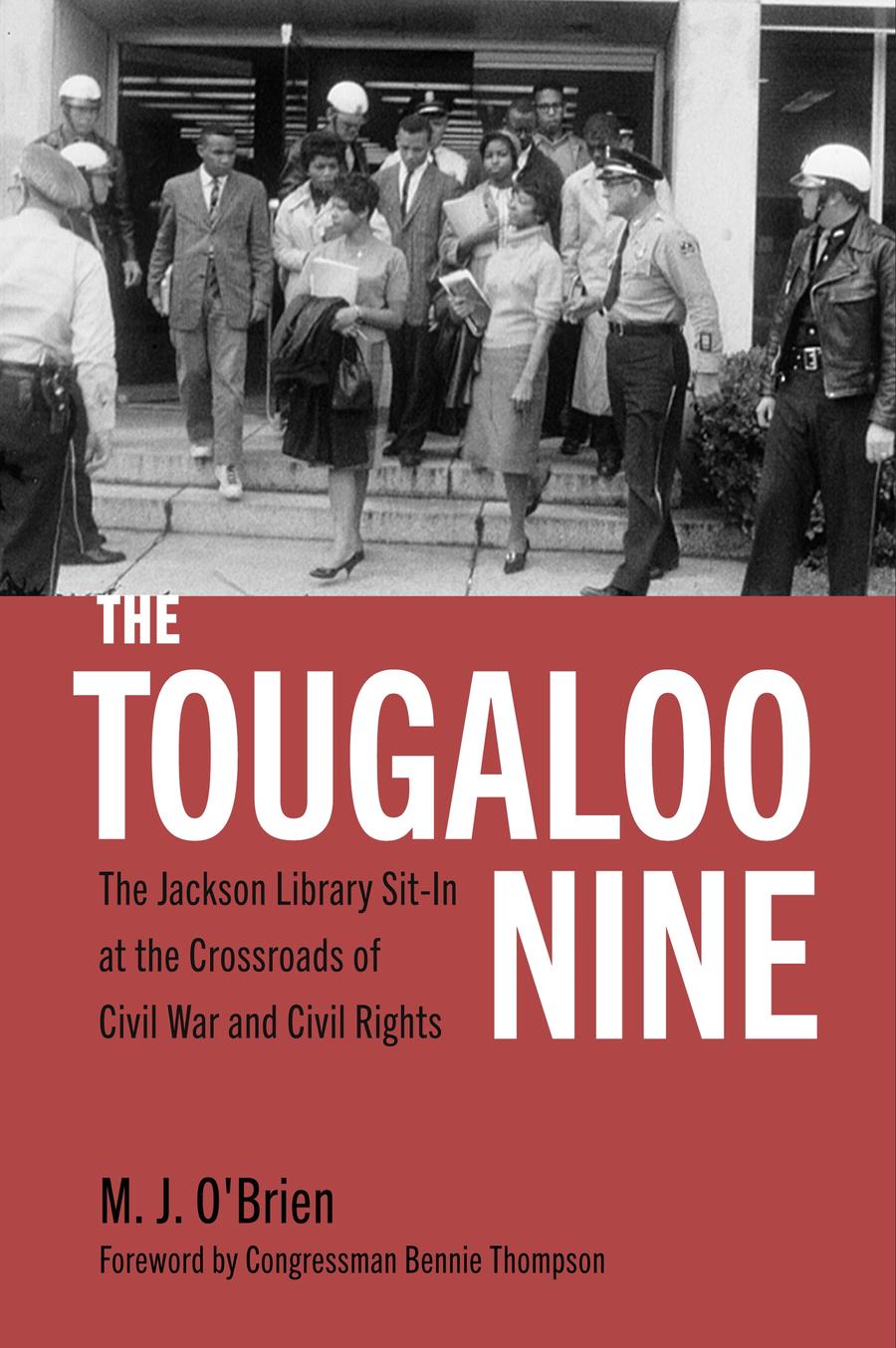
My first book of narrative non-fiction, We Shall Not Be Moved: The Jackson Woolworth’s Sit-In and the Movement It Inspired, explored that very dramatic and well-known sit-in that occurred in May 1963 in downtown Jackson. A photograph from that sit-in seems omnipresent in textbooks and surveys of modern American history; the event represented to apex of what came to be known as the Jackson Movement. In my new book, The Tougaloo Nine: The Jackson Library Sit-In at the Crossroads of Civil War and Civil Rights, I wanted to explore how this localized civil rights movement got its start during this tumultuous time in American history. I backed up two years to March 1961 to cover in-depth the very first student-led sit-in to take place in the state of Mississippi during this period, I also wanted to examine what activities by youth led to these nine students eventually stepping out to face whatever consequences might ensue. It’s a fascinating study in how the process of resistance to unjust laws and practices begins to take hold.
In 2 sentences, what is the argument of The Tougaloo Nine?
This is a story of resistance. It’s about how nine seemingly powerless young people found a way to make the point—quietly, directly, nonviolently—that the society they were living in was unfair and unjust, and that no amount of state power was going to stop them from attempting to move America forward into a more just and equitable future.
Why do we need to read The Tougaloo Nine?
Today we seem to find ourselves in another flexion point in American history. There are forces today that are attempting to lead us back to what one might call “Heritage America” where life seemed more simple, more unified, more defined. And there are other forces—perhaps characterized as “Multicultural America”—that oWer a more open, more diverse, more inclusive vision for what America might become. The Tougaloo Nine provides a deep dive into these two worldviews, as they were expressed in early 1960s Mississippi, and suggests a way forward that is not explosive, violent or in your face but simply live and let live.
Why and when did you become an American historian?
Although I write and research deeply about events in American history, I am not a trained academic historian. Since my teens (in the 1960s) I was fascinated by the civil rights movement and the massive changes it brought to our society, particularly as things began to open up for Black people in the wake of the Civil Rights Act of 1964 and the Voting Rights Act of 1965. I was thrilled to meet someone in the 1970s who had participated in the civil rights movement (and nearly sacrificed her life for the cause). Through her I became more deeply steeped in the history of that period.
I had studied philosophy and later journalism at two different universities—St. Mary’s Seminary and University (MD) and American University (DC)—and honed my writing skills in corporate settings. By the 1990s I felt ready to start writing about these big events in American history that had been somewhat overlooked. I was particularly drawn to the Gandhian philosophy of nonviolence which animated the early days of the civil rights movement. My books show how this philosophy worked to shed light on unjust practices without the use of violence on the part of those challenging the system. I believe these lessons are essential to helping us move forward through our current challenges.
What is your next project?
I see The Tougaloo Nine as a prequel to We Shall Not Be Moved, with the two books complementing each other and filling in the blanks along the way. For my next project, I hope to explore a third volume—a sequel, if you will—that will continue to explore the societal changing events of the later 1960s and early 1970s through the lens of the youth of Jackson, Mississippi, as America adapted to a more diverse group of fully invested, fully enfranchised citizens. It might be called The Children of the Jackson Movement and would follow several of their number (perhaps six or seven) as they come into full possession of the American dream and their place in a more equitable society from that of their forebears. This trilogy would provide the basic building blocks of how movements begin, how they flourish, and how they come to a close as times and issues change. Stay tuned …