
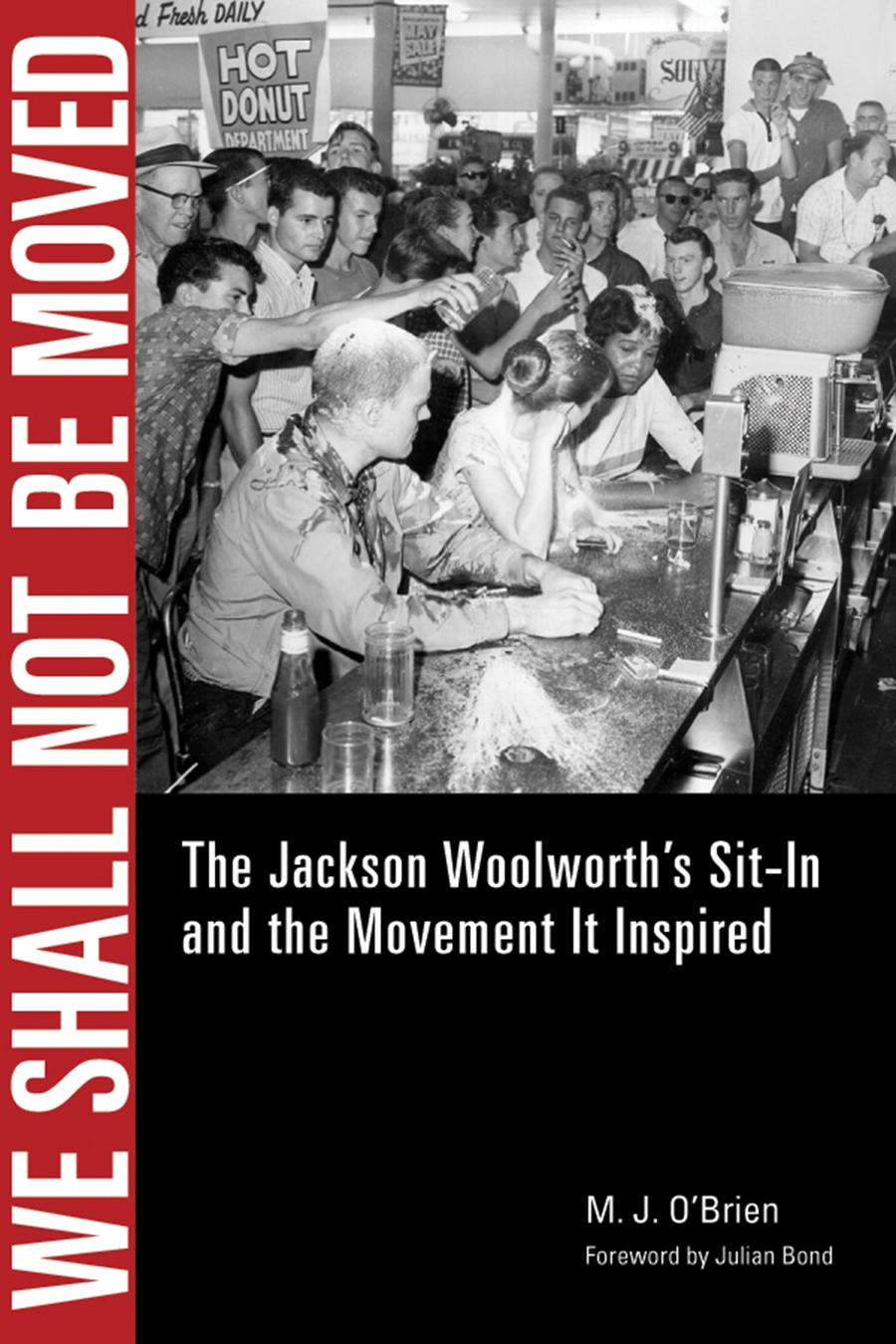
We Shall Not Be Moved: The Jackson Woolworth’s Sit-In and the Movement It Inspired

Chapter 10: The Next Steps
Excerpt: The March on Washington

The most significant event on the national civil rights stage that year was the enormous March on Washington for Jobs and Freedom. Many of the Jackson Movement activists participated.

One of these was Pearlena Lewis, who had taken a leave of absence from Tougaloo in the spring of 1963 to focus on her role as president of the North Jackson Youth Council and later as co-chair of the Jackson Movement strategy committee. Although she had intended to return to school the following fall, the loss of Evers and other events of early summer convinced Lewis that activism should take precedence over education for a time. She dropped out of Tougaloo and took John Salter’s place as advisor to the youth council, working mostly on the boycott and voter registration.

In her last serious discussion with Evers—the one in which he foreshadowed his death—Lewis recalled that he expressed interest in making sure that Mississippi’s youth took part in the March on Washington. Lewis was instrumental in ensuring that Evers’s last wish was carried out, and four buses left downtown Jackson on Tuesday morning, August 27, headed for Washington. Lewis, her brother Alphonzo, and Doris Allison all participated, as did many of the Jackson ministers and members of the youth council.
Allison recalled that the white bus drivers gave their passengers trouble all the way to Washington. The driver of her bus slowed down more and more as they came closer to the nation’s capital, until Allison got up her nerve to challenge him. “Damn you!” she shouted. “We don’t care if we don’t get there, but let me tell you something: neither you nor nobody’s going to put out this fire!” Because of the delay, the Mississippi group arrived later than expected, and even the NAACP’s Roy Wilkins expressed concern when they didn’t show up on schedule.

Finally, as the march was getting under way, one of the speakers at the podium called out, “Mississippi, are you out there? Let me hear you!” Allison recalled with glee how the nearly 250 Mississippians, just arriving, responded with a shout that rang out across the mall. The crowd cheered, their relief tangible that members of the nation’s most closed society had, if only briefly, found their way out.

Annie Moody traveled to the march with Ed and Jeannette King, and despite the integrated group in the car, they arrived without incident. Joan Trumpauer was also on hand. In fact, she had been working that summer in the march’s press office, assisting with preparations for the historic event. She was still working when the march itself began and had to be bused to the front, where a special section had been set aside for march workers. Her late arrival was noted by a Scripps-Howard reporter under the small headline “Marched 50 Times, Misses Big One.”

Moody and Trumpauer had similar reactions to Dr. King’s famous “I Have a Dream” speech that day. Both felt he was talking about pie in the sky. “Certainly at this point, looking back on it and reading the speech and hearing it again, I can see the majesty of it,” Trumpauer later admitted. “But our reaction as young radicals was, ‘He’s in his own dream world.’” Moody’s recollection was even more pointed: “I sat on the grass and listened to the speakers, to discover we had ‘dreamers’ instead of leaders. . . . Martin Luther King went on and on talking about his dream. . . . In Canton we never had time to sleep, much less dream.”

After the march, Trumpauer caught a ride back to Tougaloo with Moody and the Kings, and she and Moody were subjected to some name-calling when they integrated a shower stall at a federal campground in Tennessee.

We Shall Not Be Moved: The Jackson Woolworth’s Sit-In and the Movement It Inspired

Chapter 10: The Next Steps
Excerpt: The March on Washington

The most significant event on the national civil rights stage that year was the enormous March on Washington for Jobs and Freedom. Many of the Jackson Movement activists participated.

One of these was Pearlena Lewis, who had taken a leave of absence from Tougaloo in the spring of 1963 to focus on her role as president of the North Jackson Youth Council and later as co-chair of the Jackson Movement strategy committee. Although she had intended to return to school the following fall, the loss of Evers and other events of early summer convinced Lewis that activism should take precedence over education for a time. She dropped out of Tougaloo and took John Salter’s place as advisor to the youth council, working mostly on the boycott and voter registration.

In her last serious discussion with Evers—the one in which he foreshadowed his death—Lewis recalled that he expressed interest in making sure that Mississippi’s youth took part in the March on Washington. Lewis was instrumental in ensuring that Evers’s last wish was carried out, and four buses left downtown Jackson on Tuesday morning, August 27, headed for Washington. Lewis, her brother Alphonzo, and Doris Allison all participated, as did many of the Jackson ministers and members of the youth council.

Allison recalled that the white bus drivers gave their passengers trouble all the way to Washington. The driver of her bus slowed down more and more as they came closer to the nation’s capital, until Allison got up her nerve to challenge him. “Damn you!” she shouted. “We don’t care if we don’t get there, but let me tell you something: neither you nor nobody’s going to put out this fire!” Because of the delay, the Mississippi group arrived later than expected, and even the NAACP’s Roy Wilkins expressed concern when they didn’t show up on schedule.

Finally, as the march was getting under way, one of the speakers at the podium called out, “Mississippi, are you out there? Let me hear you!” Allison recalled with glee how the nearly 250 Mississippians, just arriving, responded with a shout that rang out across the mall. The crowd cheered, their relief tangible that members of the nation’s most closed society had, if only briefly, found their way out.

Annie Moody traveled to the march with Ed and Jeannette King, and despite the integrated group in the car, they arrived without incident. Joan Trumpauer was also on hand. In fact, she had been working that summer in the march’s press office, assisting with preparations for the historic event. She was still working when the march itself began and had to be bused to the front, where a special section had been set aside for march workers. Her late arrival was noted by a Scripps-Howard reporter under the small headline “Marched 50 Times, Misses Big One.”

Moody and Trumpauer had similar reactions to Dr. King’s famous “I Have a Dream” speech that day. Both felt he was talking about pie in the sky. “Certainly at this point, looking back on it and reading the speech and hearing it again, I can see the majesty of it,” Trumpauer later admitted. “But our reaction as young radicals was, ‘He’s in his own dream world.’” Moody’s recollection was even more pointed: “I sat on the grass and listened to the speakers, to discover we had ‘dreamers’ instead of leaders. . . . Martin Luther King went on and on talking about his dream. . . . In Canton we never had time to sleep, much less dream.”

After the march, Trumpauer caught a ride back to Tougaloo with Moody and the Kings, and she and Moody were subjected to some name-calling when they integrated a shower stall at a federal campground in Tennessee.