
The Trayvon Martin Generation Comes of Age
WHAT IS NOW KNOWN in certain circles as “the heroic civil
rights movement” got its jump start, many would say, with the horrific torture
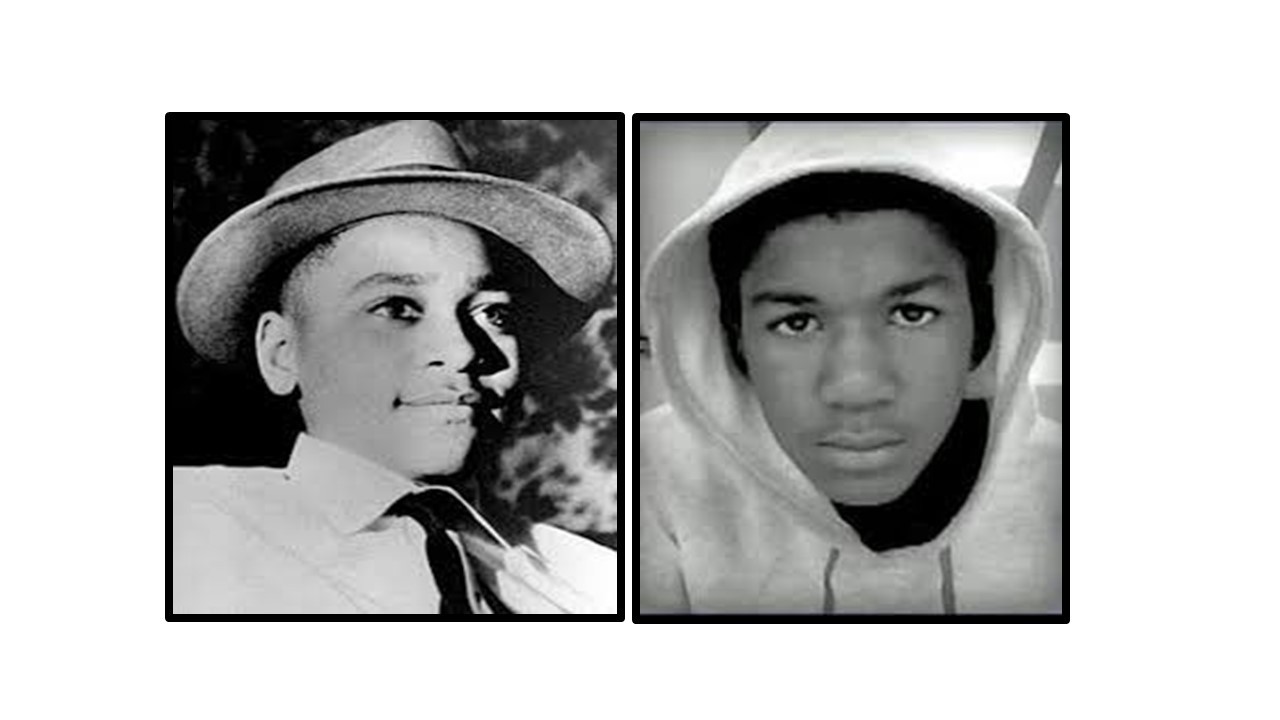
and murder of a 14-year old boy named Emmett Till in 1955. Till’s
assassination made headlines around the world and slowly, oh so slowly, things
began to change. There was 42-year-old Rosa Parks’ dramatic decision not to
move from the seat in the Whites-only section of the bus just three-and-a-half
months after the slaying, citing Till as her point of reference for her refusal. There were
the nine Black students determined to enter the all-White Little Rock High
School in 1957, thanks largely to their adult coordinator and leader, the 42-year-old
Daisy Bates. This was another headline-grabbing moment that alerted Americans
of all stripes that all was not well in the Southland and that Freedom was
a-stirring within the hearts of its Black populace.
But it wasn’t until North Carolina’s 1960 Greensboro sit-in
and the wave of protests that followed in literally hundreds of cities
throughout the U.S. in the ensuing months and years—coordinated and executed
primarily by young college and high school students throughout the South—that
things really took off. It was then that America began to listen to the voices
of nonviolent protest and started to understand the depth of the racial divide
that separated the country. The timing of these seemingly spontaneous acts of
civil disobedience should have surprised exactly no one. They were, in large
part, the direct result of the Emmett Till murder and the failure of the
American jurisprudence system to prosecute that heinous crime and bring Till’s murderers to justice.
Perhaps it was Anne Moody in her powerful memoir Coming
of Age in Mississippi, who first gave voice to the obvious radicalization
that took place of many Black children in the mid-1950s. In vivid prose, Moody
details how she first heard of Till’s murder while on her way home from high
school, and what a shock it was that someone her very age could be killed for
something so seemingly innocent as flirting with a White woman. After days of hearing more
about the murder from both her own family and from the White family she did
housekeeping work for, she recalled feeling something that would animate her
future activism:
Before Emmett Till’s murder, I
had known the fear of hunger, hell, and the Devil. But now there was a new fear
known to me—the fear of being killed just because I was black. This was the
worst of my fears. I knew once I got food, the fear of starving to death would
leave me. I also was told that if I were a good girl, I wouldn’t have to fear
the Devil or hell. But I didn’t know what one had to do or not do as a Negro not
to be killed. Probably just being a Negro period was enough, I thought.
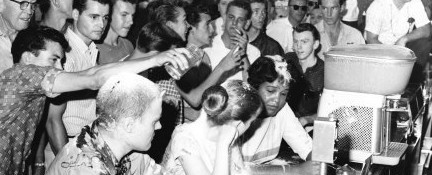
Anne Moody (right) with friend Joan Trumpauer and Tougaloo professor and mentor John Salter at the Woolworth’s counter in Jackson, Mississippi in 1963.
That simple realization, based on her knowledge that she was
in the same boat as Till—and the very same age as he had been—would, less than eight years later, drive Moody into the vanguard of the civil rights movement on the
streets and at the lunch counters of Jackson, Mississippi. In time, she would become a powerful
spokesperson for the cause not only through her breakthrough memoir but also through
her rousing public speaking to raise funds for various civil rights organizations.
MOODY’S STORY IS NOT SINGULAR. Many civil rights veterans
today point to the wanton and senseless murder of young Till as their touchstone
for later activism. In his award-winning “Memoir of the Movement” Walking with
the Wind, longtime Georgia Congressman John Lewis recounts with similar
shock and awareness what the Till killing meant for him and his generation of young Black men:
As for me, I was shaken to the
core by the killing of Emmett Till. I was fifteen, black, at the edge of my own
manhood just like him. He could have been me. That could have been me,
beaten, tortured, dead at the bottom of a river. It had been only a year since
I was so elated at the Brown decision. Now I felt like a fool. It didn’t
seem like the Supreme Court mattered. It didn’t seem that the American
principles of justice and equality I read about in my beat-up civics book at
school mattered… . They didn’t matter to the men who killed Emmett Till.
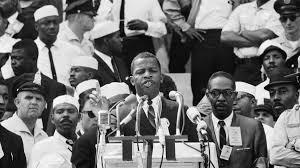
SNCC Chairman John Lewis speaking at the March on Washington in 1963.
Less than five years later, Lewis would become an essential
member of the Nashville sit-in movement, an incorporating member of the Student
Nonviolent Coordinating Committee—later elected its Chairman—would give an
incendiary speech at the March on Washington and, in 1965, would demonstrate an enduring example of
commitment to the Struggle when he was beaten bloody on the Edmund Pettus
Bridge in Selma.
Historians estimate that 70,000, mostly youthful citizens
participated in the sit-in movement across hundreds of cities throughout the
U.S. Not only could they point to injustices done to themselves or their
families, but they could point to the example of Emmett Till, which caused them
to understand, as Bob Dylan so adeptly pointed out, “When you ain’t got
nothin’, you got nothin’ to lose.” They were called “The Emmett Till
Generation.” They put their bodies on the front lines and brought about
essential change to 1960s America. It was THESE Americans who caused the
enactment of the Civil Rights Act of 1964—introduced by President Kennedy just
months before his death—and the Voting Rights Act of 1965.
NOW, ONCE AGAIN, AMERICA IS IN AN UPROAR. Black men continue
to be killed at disproportionate rates by police and by White vigilantes nationwide. Once again, the
rage has reached a critical tipping point. And the timing is directly linked to
the killing of a Black youth, Trayvon Martin, eight years ago. So many young
black men point to the shocking murder of Martin as the point at which they came
to consciousness about America’s two-tiered system of justice. On Monday, June
1, young activist Jaden Olley, at a rally for George Floyd on the streets of
Washington, DC, spoke to the PBS Newshour: “I was eight-years old when the
Trayvon Martin case happened,” he said. “Ever since then, I understood that it
could be me.”
My own sons, now twenty-seven and twenty-five—both young
Black men—came to the same conclusion at the same time. It was in late February
2012, upon hearing of the Martin killing, that my wife and I had to have “the
Talk” with these youth on the verge of manhood. One was born just three months after Trayvon Martin had been; Martin had just turned 17 when he was murdered. We had to urge them to be
careful even in our own peaceful and progressive neighborhood in Northern
Virginia. [Martin, as you may recall, was walking through a gated community on
his way to his father’s home in the Orlando suburb of Sanford, Florida.] Our
older, more sociable son admitted that ever since he was twelve, he had
realized he needed to put on a smile and reassure our overwhelmingly White
neighbors that he was friendly, safe, and non-threatening while walking through
his own neighborhood. Imagine what a terrible burden that reality must be to
carry day-to-day.
You can be assured that other young people, both Black
and White, were traumatized by the Trayvon Martin killing. Not only did they
see someone their own age murdered, but they later saw the murderer get off
without any serious consequences for his tracking and terrorizing a Black
youth. It was a shocking moment for them – just as the exoneration of the Emmett
Till killers had been for an earlier generation. And then they watched as the murders continued: of Michael Brown (18), of Eric Garner (43), of Philando Castile (32),
of Sandra Bland (28), of young Tamir Rice (12), of Laquan McDonald (17), of
Freddie Gray (25), of Natasha McKenna (37), of Walter Scott (50). And not a damned thing happened. Many of those watchful youth
determined at some point along that trajectory that if they ever had a chance
to do anything about such matters, they would take charge and insist that the police keep ALL Americans safe.
That moment has now come.
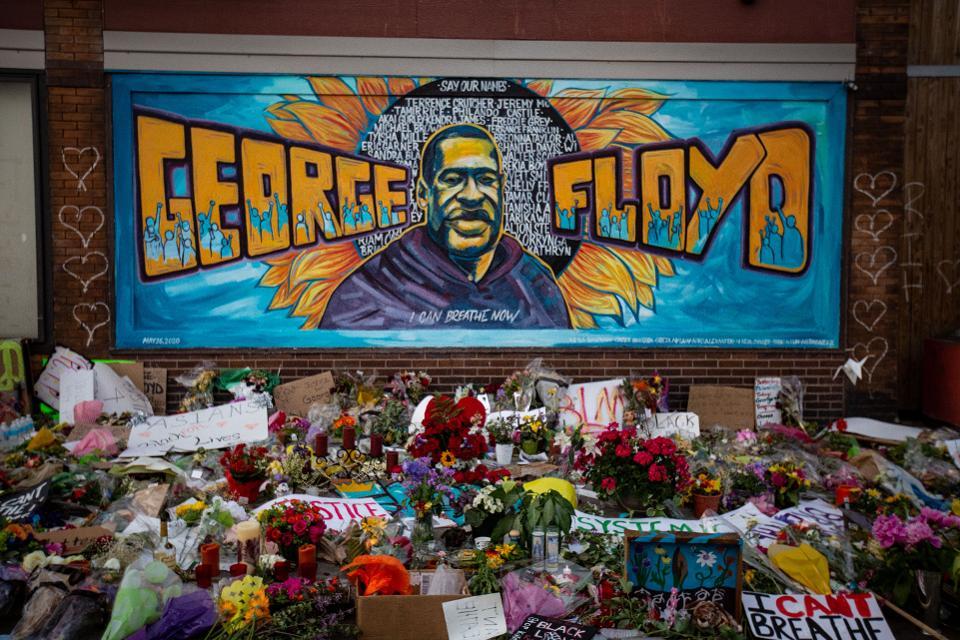
AFTER WATCHING THE HORRIFFIC VIDEO of George Floyd’s murder
at the hands of the Minneapolis police, thousands of young people have turned
out in cities across America to express their outrage that these unconscionable
criminal acts–by those who pledged to protect and defend us–have not yet been
eliminated. This is the Trayvon Martin Generation coming of age and rising up
to express their rage and to say that “this will not continue on my watch.”
One hugely encouraging development since the early 1960s is
the overwhelming number of Whites—young, old, and in-between—who are standing
with their Black brothers and sisters in the streets. This is vastly different
from the few Whites who committed to the struggle in the early 1960s. Joan
Trumpauer, who sat with Anne Moody at thet Woolworth’s counter in Jackson, and her ilk were the exception—at least until the 1964 Freedom Summer
brought hundreds of White college students to Mississippi. That experience would
change the trajectory of their lives.
Think of how many lives are being transformed today on the
streets of America’s cities—standing up for racial justice in the face of
overwhelming odds. Indeed, thousands of Whites are publicly expressing outrage that such brutality against Blacks continues. Some are even putting
themselves between their Black friends and activists and the police, using
their White privilege to good effect.
But the pushback has been equally ratcheted up due to an
erratic, power grabbing, unstable national leader and the craven politicians
and bureaucrats who do his bidding. No matter. All of the ridiculous posturing
and unlawful acts by this illegitimate President—John Lewis was the first person to publicly
use this moniker—will not quell the fire that has been lit by the Trayvon
Martin Generation’s coming of age. Nothing short of federal legislation reining
in police forces nationwide and requiring equal protection to all of America’s
citizens will quench this rage. Just like their heroic forebears in the Struggle,
this generation has its Eyes on the Prize. And They Shall Overcome.