
First in a Series on the Federation of Southern Cooperatives
It’s been more than six months since I published my last blog post,
which announced the publication of a friend’s new book about the Jackson Church
Visits—Sanctuaries of Segregation—and
recounted the story of my encounter with John Anderson, whose seating of four
Black women in the, until then, all-White St. Andrew’s Episcopal Church in
downtown Jackson, Mississippi, broke the color barrier and opened up new
possibilities for respectful dialog on the race issue. The re-posted blog was
called “A Legacy of Hope” and its reposting coincided with the first 100 days
of our current President’s Administration.
I needed hope then and I need it now, given all that has
occurred in the ensuing months. [We are
approaching Day 300 and as far as I can see, things have gone from bad to worse.]
At the time of that last blog, I decided to take a break from adding to the
chatter of the blogosphere, since none of it seemed to be making much
difference in the direction our democracy was headed.

Instead, I decided, I would concentrate on the work before
me. In May, I was commissioned to develop the 50th Anniversary
commemorative booklet for an economic justice organization called The
Federation of Southern Cooperatives, which has struggled mightily for the
past half century to increase opportunities for the working poor through
cooperative development, primarily in agricultural communities throughout the
Southern United States. The project had an incredibly ambitious timeline, which
I agreed to, in part, to keep my mind focused on the deadline and drop all need
to think about the deteriorating political situation.
The result, which was released in August at the Federation’s
50th Anniversary celebration in Birmingham (AL) is a wonderful compilation
of the Federation’s 50 years of service to some of America’s poorest citizens. For
the next several months, I will highlight excerpts from the booklet,
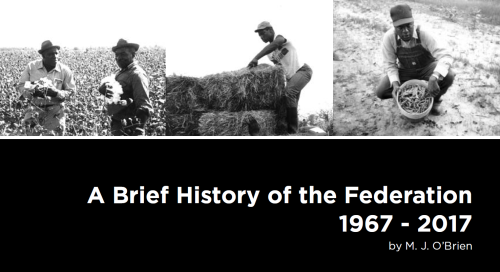
particularly from my “Brief History of the Federation: 1967- 2017.” It is my
way of lighting a candle rather than cursing the darkness. Here is the first
installment of this series.
Preface
The 50-year history of the Federation of Southern Cooperatives/Land
Assistance Fund is one of service, struggle, and empowerment. Against
overwhelming odds, this organization—and those who energize it—has offered hope
and sustenance to some of the most economically impoverished people in America.
They also happen to be some of the most resilient people, willing to try new
forms, new models, new approaches because the ones they were taught to idealize
did not work for them. They also happen to be mostly Black farmers and
agricultural workers who have tended to the crops and livestock in the American
Southland for generations, dating back to when their forebears were enslaved. They
know what they’re doing; they just need the freedom and the capital to do it.
This has been their plight: to live in the richest nation on earth, amidst some
of the most fertile soil on the planet, and not have enough to eat, not be able
to feed their families, and not for want of trying. Governmental policies,
cultural intransigence, and powerful elites have conspired to insist that they
either live poor or leave. Many did leave and headed North or West to crowd the
cities and overwhelm those urban landscapes. Others decided to stay. This was
their home, after all. They would stay and try to find a new way of survival.
Cooperatives offered the best opportunity. By banding together with others,
perhaps they could make a go of it; perhaps they could change the dynamic of an
oppressive culture; perhaps they, too, could grab a piece of that elusive
American Dream. Perhaps … .
In the Beginning
The 1960s were a decade of great turmoil. American life was
being turned on its head. Protests and demonstrations about racial segregation
had finally pushed their way onto the front pages of newspapers across the
country and into the halls of America’s political establishment. Questions
about how we could all live together as free and equal people were at last
given serious consideration. The Civil Rights Act of 1964 and the Voting Rights
Act of 1965 were direct, tangible results of the clamor for change. Federal
power was wielded over intransigent Southern states that had found ways,
despite existing law, to disenfranchise their Black populace—often comprising
upwards of 30 to 40 percent of the residents of many Southern states.
These aggrieved people, who formed the backbone of the
South’s agrarian economy, were impoverished despite centuries of planting,
nurturing, and harvesting the cash crops that made the South wealthy: cotton,
sugar, and tobacco. Enslaved on these
shores for their first 250 years, then emancipated, shockingly, without a plan
for their survival, these Southern Blacks adapted to a changing political
environment that left them without land to live on or homes to live in. The
promise of “40 Acres and a Mule,” which could have given them a fresh start,
evaporated in the recriminating politics that followed the American Civil War.
For many, the only option left was to agree to till the land of their former
enslavers, for what would come to be known as “slave wages”—cents on the dollar
for a full day of backbreaking work in the torpid, Southern summer sun, and
rickety shacks to live in on the landowner’s plantation. This was freedom?
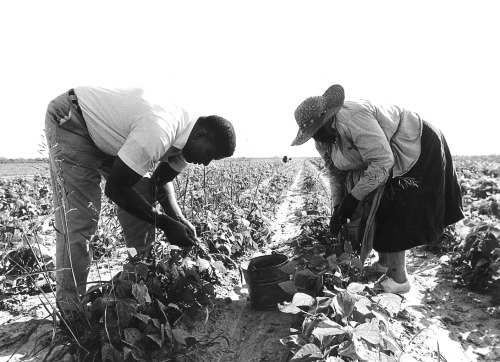
“This has been their plight:
to live in the richest nation on earth,
amidst some of the most fertile soil on the planet,
and not have enough to eat,
not be able to feed their families,
and not for want of trying.”
This system of sharecropping continued for the next 100
years as Jim Crow laws replaced the more liberal Reconstruction policies and Blacks
lost power and social status to the entrenched landowning gentry. It might have
continued had several developments not occurred: the modern civil rights
movement and the industrialization of modern agriculture. The mid-20th-century civil rights movement was
years in the making, the result of endless yearning for a better life. Its
gains, however, were mostly social (integration) and political (voting rights).
Although economic justice was always a part of the dialog—the 1963 March on
Washington, was, after all, titled the March for Jobs and Freedom—somehow it
always took a back seat to the more pressing demands of political and social
equality.
But economic issues were always at the forefront of poor peoples’
minds. As Federation stalwart and social activist Carol Prejean would later
say, “For us, this was survival!” How to find enough to eat, to keep a roof
over your family’s head, to save for a rainy day, these were daily concerns of
the Southern rural poor. The 1950s and ‘60s were a time for searching for new
models to help replace those systems that had failed to generate subsistence,
let alone security. Some who came South hoping to help with literacy and voting
rights realized quickly that, although important, these things took a back seat
to the day-to-day struggle for survival. Economic issues were more pressing
than purchasing a hamburger at the local Five and Dime. Where was the dime
supposed to come from? As Ezra Cunningham, another Federation enthusiast from
Alabama would famously say, “You Can’t Eat Freedom!” and, “A Ballot is not to
be Confused with a Dollar Bill.”
Cooperatives Offer
Hope as Agriculture Changes
One of the new forms uncovered during this period of
discovery was the cooperative business model. Cooperatives offered Black
farmers of the 20th-century rural South the same opportunity that
they offered to the 19th-century English weavers of Rochdale—the
opportunity to band together to create a new system of support and empowerment;
a chance to be a full partner in a community enterprise; a way of helping one’s
self while helping others. Cooperatives were models of democratic governance.
In that sense, they were incubators to help those left out of the political
process to see how true democracy worked. By participating in the cooperative
enterprise and voting for one’s elected representatives to the cooperative’s
board of directors, people once struggling alone suddenly had a way forward.
They understood that their vote mattered, that they were participating in
something larger than themselves and their own struggle for survival. Although
that struggle was still real, at least they were struggling with others like
themselves, working together to build something that would help the entire
community. It was exhilarating; it was empowering; it was life-affirming.
Suddenly, all of the things they had been struggling for—food, housing, employment,
health care, education—seemed possible.
The Civil Rights Movement occurred just when the South was
experiencing a revolution in agricultural techniques. Mechanization and
chemical fertilization and weed killing were dramatically changing the way crops
were tended, particularly cash crops like cotton, sugar, and tobacco. No longer
were armies of plantation laborers necessary to plant, chop weeds, and pick the
crops. Combines and chemicals could do the work previously relegated to
hundreds of day laborers or sharecroppers. The humans who had meticulously
tended these cash crops were being turned out of their homes, no longer needed
by the plantation owners who had paid them penny wages and housed them in
hovels. For landowning Black farmers, the cost of equipment and fertilizer to
employ these new techniques and technologies was often prohibitive.
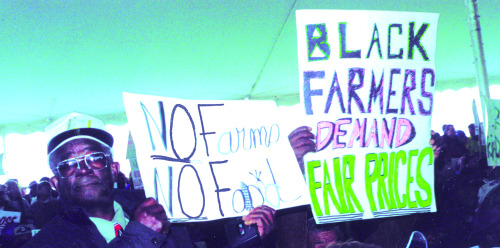
Some historians assert that it was precisely because of the
civil rights gains of the mid-1960s that African Americans were being pushed
off the land. The Voting Rights Act, in particular, opened up new opportunities
for Black political power, and many Southern counties were what we now call majority-minority
counties. Blacks had the power to sway elections and even put their own
candidates into the mayor’s office or the chief of police’s squad car. Whites
who had dominated Southern politics were not about to turn over the reins of
power without a fight, so they pushed people off of the land for the slightest
provocation—attending a political speech or registering to vote—in the hope
that they would just pack up and leave. In addition, most White-owned banks
discriminated against Black farmers seeking loans, which then forced loan
defaults and foreclosures and displaced thousands. But where were they to go?
Many fled the Jim Crow South, expecting to find better jobs
and better lives elsewhere. They flooded northern and western cities. Depending
on where the trains took them, they ended up in New York, Chicago, Cleveland,
Detroit, Los Angeles, and various stopping points along the way. From 1940 to 1970,
five million Blacks left the South seeking better lives in other parts of
America. It became, as we now know, one of the greatest migrations of people in
the history of the world. These shifting populations would put unbearable
strains on the infrastructure of these urban centers until they, too, would
explode under the weight of racial and economic stress.
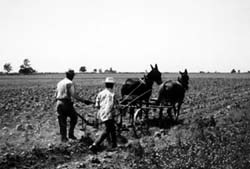
Others wanted to stay where they had been born.
They wanted to take the chance of building their lives in the rich soil that
was the rural Southland. “Bloom where you’re planted.” They wanted to create opportunities and
institutions for themselves and their families that would be better than those their
forebears had been able to conceive. They wanted to build something that would
create a legacy for the future. This, really, is where the story of the
Federation of Southern Cooperatives begins.

NEXT – The Start of the Southern Black Cooperative Movement